What Causes a Sudden Drop in Credit Score? Common Reasons Explained
Imagine, you are planning to apply for a business loan to expand your shop, buy new machinery, or manage working capital. Everything seems ready. Then you check your credit score and suddenly, it dropped. No warning. No clear reason. Just a lower number staring back at you.
For many Indian business owners, this moment is confusing and stressful. You may wonder, “I’ve been running my business honestly, so why did this happen?” The truth is that a credit score can drop suddenly due to small financial actions that often go unnoticed.
The good news is this: a credit score drop is common, understandable, and fixable. Once you know the reasons behind it, you can protect your score and even rebuild it over time.
In this blog, we will explain what a credit score really is, why it matters so much for business loans, the most common reasons behind a sudden drop, and practical ways to protect your credit score as a business owner.
You can read this blog to know about “Why Your Credit Score Decreases?”
What Is a Credit Score and Why It Matters for Business Owners
A credit score is a three-digit number that shows how responsibly you handle loans and credit. In India, credit scores usually range from 300 to 900. The higher your score, the safer you look like a borrower. A lower score signals risk.
This score is calculated based on your repayment history, how much of your available credit you use, how long you have been using credit, and how often you apply for loans or credit cards. Over time, these factors come together to form your financial track record.
For business owners, a credit score is more than just a number. It directly affects your ability to get a business loan. Lenders don’t only judge your business idea or turnover; they also check your credit score, especially for MSMEs, startups, and self-employed professionals where personal and business finances are closely connected.
Your credit score decides whether your loan gets approved, how much interest you pay, and how flexible your repayment terms are.
What Causes a Sudden Drop in Credit Score?
Credit score rarely drops without reason. In most cases, it is triggered by one or more common financial behaviors. Let us understand them one by one.
Missed or Delayed EMI Payments
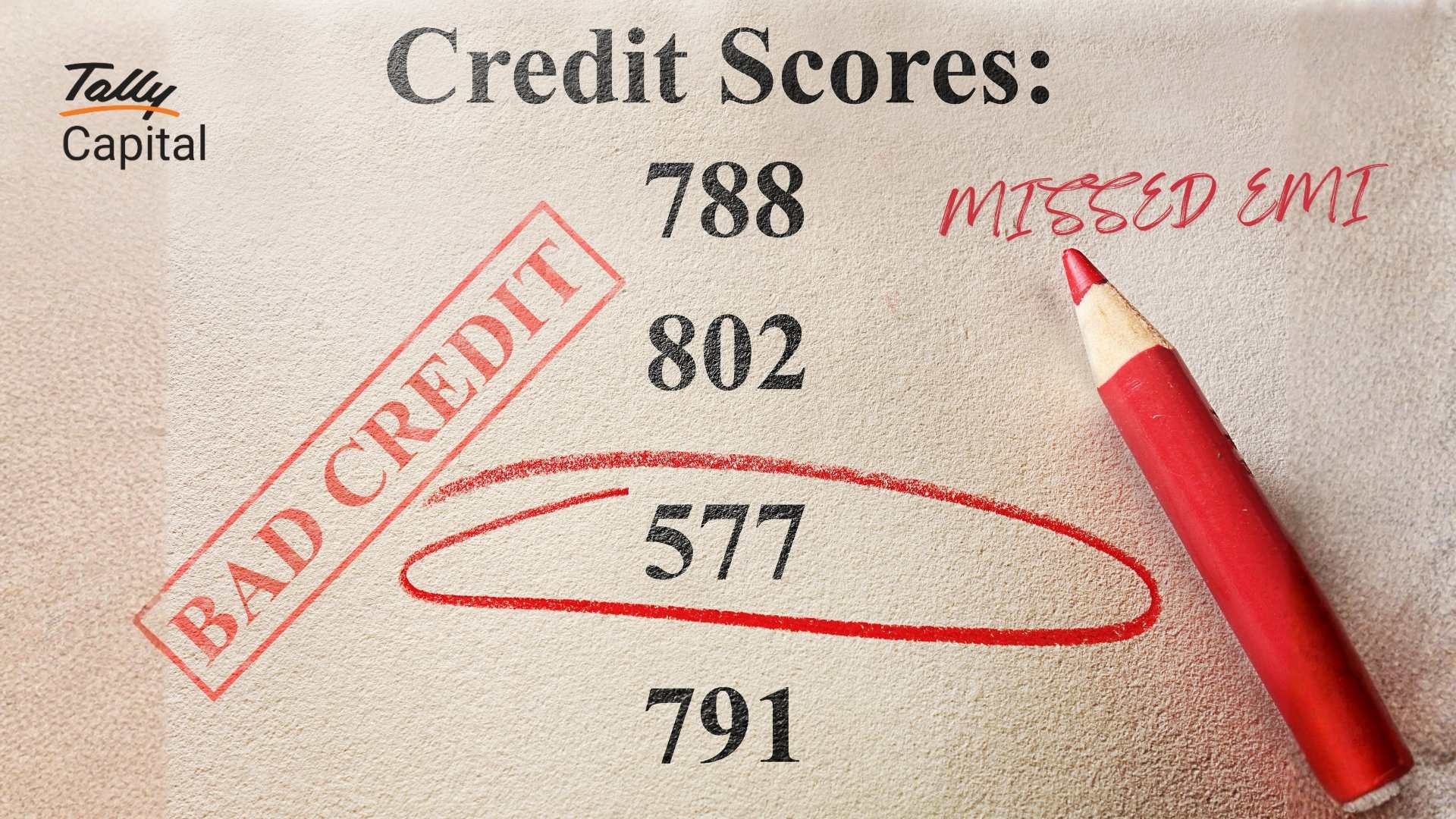
This is the most common reason behind a sudden drop. Even a single missed EMI can affect your credit score. Many business owners assume that a delay of a few days does not matter. But if your EMI crosses the due date and is reported as late, it can damage your score. A delay of 30 days hurts, 60 days hurts more, and repeated delays create a strong negative impact.
For example, if your EMI was due on the 5th and got paid on the 10th, it may still be marked as late. Over time, these small delays add up.
High Credit Utilization
Credit utilization means how much of your available credit limit you are using. If you are using too much of your credit card limit or overdraft facility, your score may fall. Many business owners use credit cards to manage daily expenses. While this is normal, constantly using 80–90% of your limit signals financial stress to lenders.
For instance, if your credit card limit is ₹2,00,000 and you regularly use ₹1,80,000, your score may drop even if you pay on time.
Applying for Multiple Loans or Credit Cards Together
When you apply for a loan or credit card, the lender checks your credit report. This is called a hard enquiry. Too many hard enquiries in a short period can reduce your score. This often happens when business owners urgently need funds and apply to multiple lenders at once, hoping at least one will approve the loan. Unfortunately, this approach backfires.
Lenders may see this behavior as desperation or financial instability, leading to a sudden score drop.
Loan Settlement or Restructuring
Many people believe that settling a loan is better than missing payments. While settlement may offer temporary relief, it negatively impacts your credit score.
A “settled” loan means you did not repay the full amount as agreed. Credit bureaus treat this as a negative event. Even restructuring a loan during financial stress can affect your score.
Errors in Credit Report
Sometimes, your credit score drops due to reasons that are not even your fault. Errors in credit reports are more common than most people think. Examples include:
- A loan shown as unpaid even after closure
- Incorrect outstanding balance
- EMI delays wrongly reported
If these errors are not checked and corrected, they can silently damage your credit score.
Long-Inactive Credit Accounts
Old credit accounts help build a longer credit history. When you close old credit cards or accounts, the length of your credit history reduces, which may lower your score.
Many business owners close unused cards, thinking it is of no use. But keeping old, well-managed accounts active actually helps your credit profile.
Becoming a Loan Guarantor
When you become a guarantor for someone else’s loan, that loan reflects your credit profile, too. If the borrower misses EMIs or defaults, your credit score gets affected even if you have not taken the loan yourself. This often happens with business partners, friends, or relatives.
How to Protect Your Credit Score as a Business Owner
Protecting your credit score is easier than fixing it later. A few disciplined habits can go a long way.
Pay EMIs on Time, Always
Set up auto-debit instructions wherever possible. Keep sufficient balance in your account to avoid failed payments. Even one missed EMI can undo months of good credit behavior.
Keep Credit Utilization Low
Try not to use your entire credit limit. As a thumb rule, use only what you truly need and keep some buffer. This shows financial control and stability.
Avoid Multiple Loan Applications
Instead of applying to many lenders at once, check your eligibility first. A focused and planned approach protects your credit score and improves approval chances.
Check Credit Report Regularly
Review your credit report at least a few times a year. Early detection of errors allows quick correction before serious damage occurs.
Be Careful with Loan Settlements
Settlement should be the last option. If possible, talk to lenders about restructuring or temporary relief that does not harm your credit profile as much.
How Long Does It Take to Recover from a Credit Score Drop?
Recovery depends on the reason behind the drop. Minor issues like high utilization can improve within a few months. Missed payments or settlements may take longer.
The key is consistency. Paying EMIs on time, reducing outstanding balances, and avoiding risky behavior slowly rebuilds trust in your credit profile.
Credit scores do not improve overnight, but with discipline, recovery is always possible.
How TallyCapital Helps You Get Business Loans Even with Credit Challenges
Many business owners avoid checking their credit score because they fear it might reduce the score further. This is a common myth. Checking your own credit score is known as a soft check, and it does not impact your credit score in any way.
When you check your credit score regularly through TallyCapital, you stay informed about where you stand financially. More importantly, you get early warnings. If your score drops due to high credit usage, a missed payment, or even a reporting error, you can spot it quickly and take action before it affects your business loan plans.
TallyCapital does more than just show you a number. It helps you understand why your score looks the way it does. You get clear insights into what is helping your score and what may be pulling it down. This allows you to make smarter decisions, such as paying outstanding balances, avoiding unnecessary loan applications, or correcting errors in your credit report.
Regular credit score monitoring builds awareness. And awareness is the first step toward improvement.
FAQs
Can a credit score decrease suddenly even if I paid all EMIs on time?
Yes. High credit utilization, multiple loan enquiries, or report errors can still cause a drop.
How many points does a missed EMI reduce?
It varies, but even one missed EMI can reduce your score by several points, depending on your overall credit profile.
Does checking my own credit score reduce it?
No. Checking your own score is a soft enquiry and does not affect your credit score.
Can I get a business loan with a low credit score?
Yes, but options may be limited. Interest rates may be higher, and eligibility conditions stricter.
How often should business owners check their credit score?
At least two to three times a year, or before applying for any loan.
Conclusion
A sudden drop in your credit score can feel alarming, especially when your business depends on timely funding. But in most cases, the reasons are simple and manageable. Understanding what affects your credit score gives you control. With timely payments, careful credit usage, and regular monitoring, you can protect and rebuild your score steadily.
Remember, a credit score is not a judgment. It is a reflection of habits and habits can always be improved. With the right awareness and support, your business finances can stay strong and future ready.
Latest Blogs
Missed EMI Impact on Credit Score:Every Borrower Must Know

How Personal Credit Score Affects Business Loan Approval

Credit Score for Business Loans: Get Faster Disbursals
What Causes a Sudden Drop in Credit Score? Common Reasons Explained

Credit Score Guide for Small Business Owners in India

9 Credit Score Mistakes MSME Owners Make